
FROMAGERIE QUATREHOMME & THE ART OF FRENCH CHEESE: AN EXPERT INTERVIEW
1. ABOUT FROMAGERIE QUATREHOMME
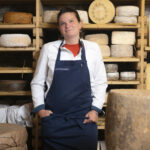
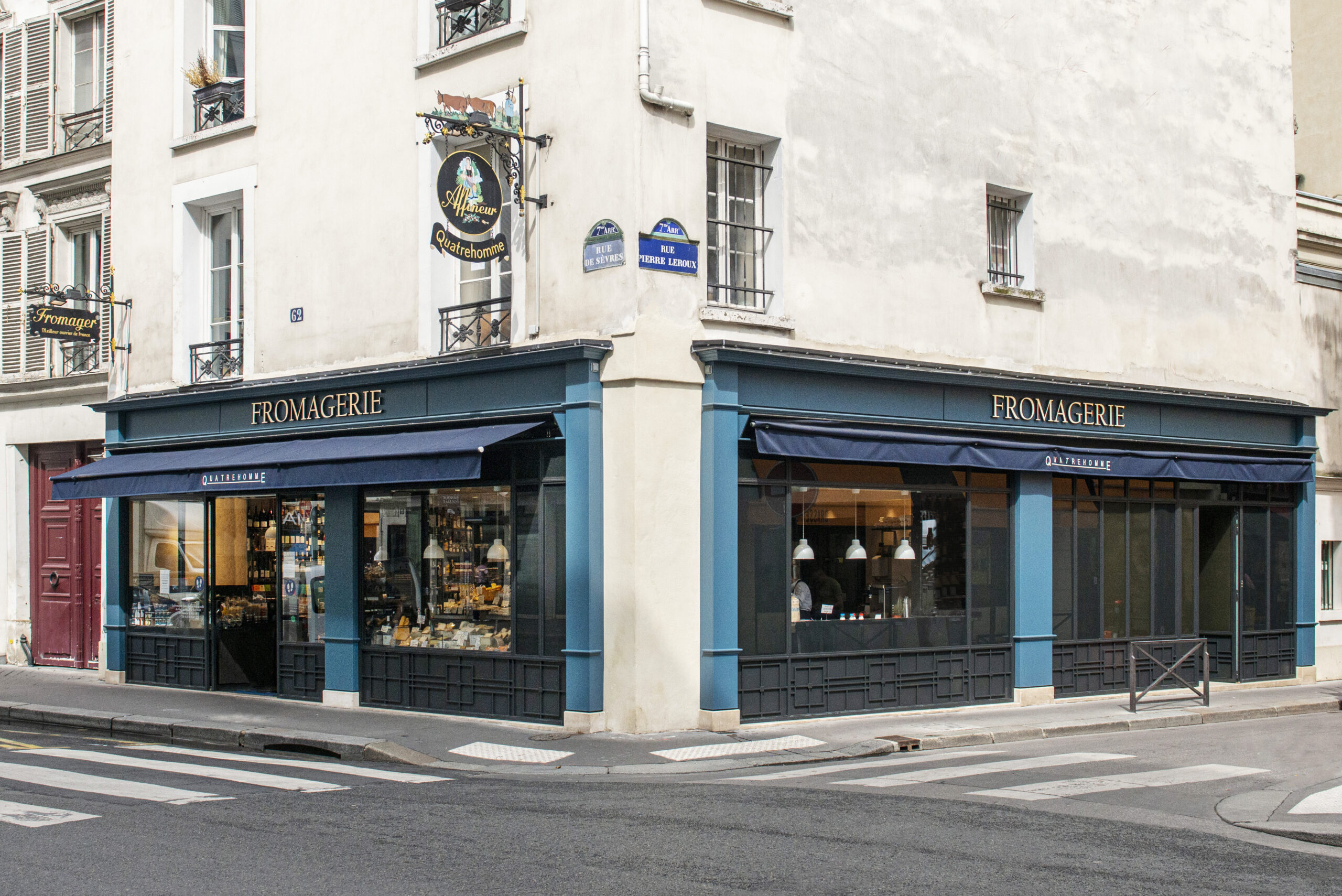
Fromagerie Quatrehomme has a long‑standing legacy in the world of French cheese. Your family has been running one of Paris’s most respected cheese shops for over half a century.
Yes, since 1953 — that’s when the fromagerie on rue de Sèvres began, with my grandparents.
And your mother, Marie Quatrehomme, was the first woman to receive the MOF [Meilleur Ouvrier, or Best Craftsperson, of France] title in cheesemongering in 2000. What impact did this distinction have on the fromagerie?
There was truly a before and an after. My mother was the first woman in the first class of Meilleurs Fromagers [Best Cheesemongers]. She won alongside three men.
Before, my mother spent a lot of time in her shop with her customers, but she had no media visibility at all.
After the MOF, she continued to spend a lot of time with her customers, but the title of Meilleur Ouvrier de France opened up a very media‑focused side. She received a lot of press coverage, radio interviews, and a bit of television. She traveled, and the business gained visibility from an international clientele who didn’t know us and weren’t familiar with the profession before.
So there was an enormous impact and very significant visibility internationally, but also in Paris, by joining this wonderful family of Meilleurs Ouvriers de France for my mother.
Today, you and your brother are the ones carrying this tradition forward. How has your family’s craft been passed down over the years and generations?
It’s really a tradition that’s passed on orally. We don’t have manuals or written guides.
The cellar — a natural stone cellar you can see on our website — developed its own ecosystem over time. The humidity, the molds, and the microorganisms that developed in the cellar created an absolutely extraordinary aging cellar for Paris.
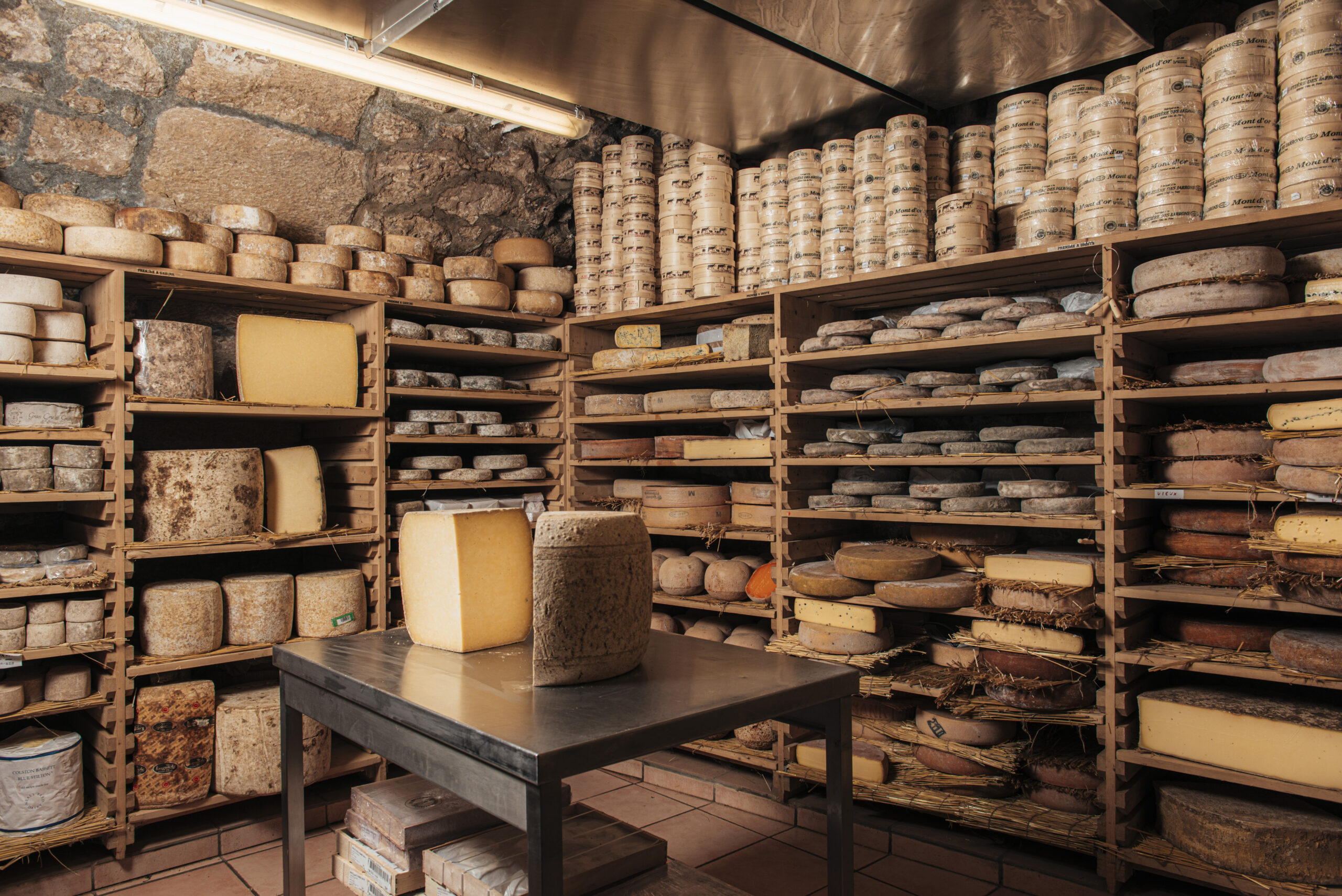
For affinage [cheese aging, ripening and maturation], there are ancestral techniques such as rubbing and washing the cheeses.
There are also new methods. Sometimes we test things to go further and try out different pairings. Sometimes the tests work, sometimes they don’t, but we always handle the cheeses with deep respect for the producer’s work and for the product itself. We try to bring it to its optimal tasting point, the moment when all its flavors are at their peak.
What innovations have you introduced since you and your brother took the reins at the company?
Since my brother and I took over the company, we have tried to make changes gradually. Redesigning the visual identity and the logo, updating the imagery in our shops, new uniforms for our team. Our work initially focused on the brand image.
We also introduced new products: marinated cheeses, smoked cheeses… little by little, we offered our customers new creations that have since become essentials, such as a Charolais [goat cheese from southern Burgundy] with whisky, or a Saint-Nectaire [a cow’s milk cheese from the Auvergne region of France] with balsamic vinegar.
2. ABOUT FRENCH CHEESE
What are the main factors that distinguish French cheese from that of other regions of the world?
What makes the French terroir so rich is the variety in its geography and livestock. Many countries have either cows, or sheep, or goats. But France has all three, in different parts of the country.
There is also a very important geographical diversity: plains, mountains, mid‑mountains, coastal areas…

All of this allows the French terroir a diverse range of cheeses.
In France, we have lactic-set cheeses, fresh cheeses, washed‑rind cheeses, cooked‑pressed cheeses, blue cheeses, soft‑ripened cheeses, and countless others. There are many families of cheese, whereas in other countries production is often less diversified.
This diversity of production is linked to the history of France.
Starting in the Middle Ages, cheese production was often handled by religious institutions. Many abbeys began making cheese, and the tradition continued from generation to generation in specific regions.
3. FRENCH CHEESE AND THE CONCEPT OF TERROIR
You spoke about the richness and diversity of the French terroir. Terroir is a very important concept in French gastronomy, helping us understand the link between taste, place, culture, and craftsmanship.
We even dedicated an article to this topic to explore all its nuances. In the context of cheese and the work of Fromagerie Quatrehomme, how do you integrate the notion of terroir into your daily practice?
I’m not sure the notion of terroir really applies to our work in that way. What interests us at Fromagerie Quatrehomme is selecting the producers we work with.
We try to get to know the people, to go see them in their regions, and to understand their work so that we can then talk about it to our customers in the shop.
We look for cheese producers who put real care into their animals, with the way they feed them, with the production or collection of the milk, and with the quality of the cheesemaking.
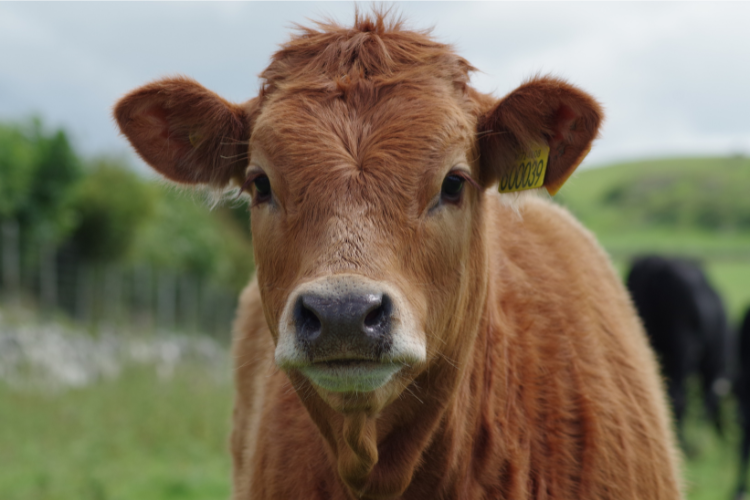
Even though terroir isn’t part of your work at the shop, it’s very much part of the work of the producers you choose to work with.
How do you see terroir’s influence on the character of a cheese?
For me, terroir is a set of factors that makes a product — any product — quite unique.
The notion of terroir in a cheese is based on several factors: the breed of the animal, the environment in which it lives, the climate, the latitude…
Take, for example, the soil, and the grass the animals will eat. Depending on the season during which the cheese is made, the grass will not be the same at different times of the year. And all the flora they ingest that will influence the characteristics of the milk.
All these factors that make a cheese unique make it impossible to produce elsewhere. Even if you take the same breeds of cows and try to make the same cheese with the same technique, if you are somewhere else, with another person or under different conditions, the result will never be the same. There are things in the land, in the know‑how, in the level of humidity of the air, and in the ecosystem of the cellar, which cannot be duplicated.
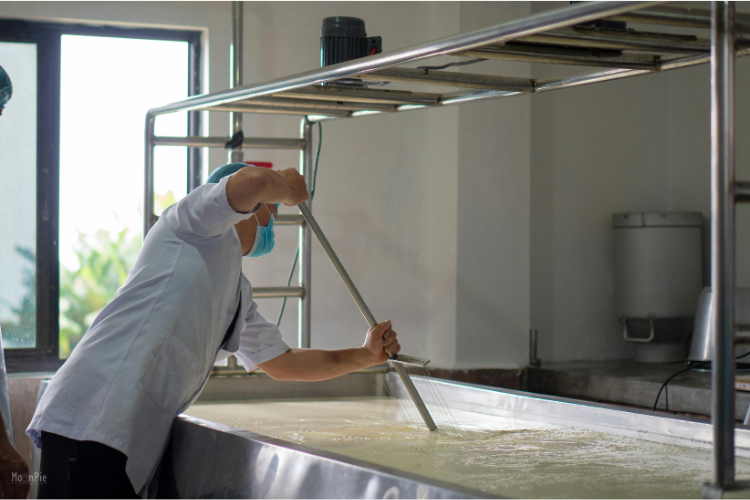
After that, it’s in the technique and savoir-faire of the cheesemaker that makes the cheese. The cheesemaking profession is still an extremely manual one. There is the curdling, the molding, turning the cheeses. The human touch is very present. All of this makes each cheese, and even each cheese from each producer, unique.
There are, of course, cheeses that share common terroirs, and sometimes we have very large AOP areas, so these geographical factors vary a bit.
4. FRENCH CHEESE AND THE AOP SYSTEM
You mentioned AOPs [France’s system for safeguarding regional foods]. In France, the AOP system plays a key role in defining and protecting the idea of terroir.
Could you explain what an AOP is and how it helps maintain the connection between a cheese and its terroir?
AOPs serve to preserve the authenticity of products by ensuring that they are made within a defined geographical area, according to specific techniques and know‑how.
AOP cheeses share protected characteristics in order to preserve their unique identity.
If we take the example of a Camembert de Normandie, you must follow a certain number of rules regarding the size of the cheese, its weight, its aging time, what breed of cow the milk comes from, the geographical area, etc.
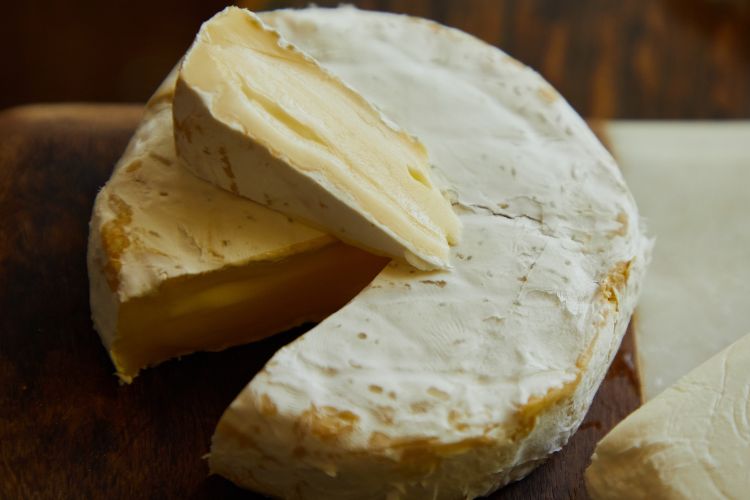
You cannot use the name “Camembert de Normandie” if the cheese does not meet all of these criteria.
5. A TALE OF TWO BRIES
Let’s take another example: Brie, which, along with Camembert, is one of the best‑known French cheeses.
However, thinking of Brie as a single cheese is misleading, because there are several types of Brie, including two famous AOPs: Brie de Meaux and Brie de Melun.
These are excellent examples for understanding the AOP system. Can you tell us about these two Bries?
Of course. But it’s not an easy example, because these are two cheeses with very large AOP zones.
They share the word “Brie,” and they are both bloomed‑rind cheeses, so they belong to the same family.
However, they do not have the same AOP production area and they do not have the same organoleptic characteristics. They don’t have the same rind, the same texture, or the same taste.
Brie de Melun is generally the more typical one, with a more pronounced farmhouse flavor, capable of aging longer and developing mushroomy, rustic aromas.
Brie de Meaux has slightly creamier, more enveloping notes on the palate. The AOP zone for Brie de Meaux is very large. The town of Meaux is in Île‑de‑France, quite close to Paris, while the AOP zone can extend all the way to the Meuse region [in northeastern France].
Our Brie de Meaux comes from the Dongé dairy, which is located in the Meuse.
But it’s difficult to generalize, because as I said, these are two cheeses with fairly large AOP areas. It’s worth noting that AOP cheeses represent only a small portion of French cheeses.
Do you work with other Brie cheeses that are not AOP?
No, I don’t have any. I’m not saying that I only work with AOP cheeses, but for Brie, at Fromagerie Quatrehomme, we have always offered Brie de Meaux and Brie de Melun.
We make a lot of preparations with Brie de Meaux, especially double Bries: two Bries stacked together, filled with a mixture of truffles, walnuts, hazelnuts, and pistachios.
That sounds delicious!
6. VISITING FROMAGERIE QUATREHOMME
Thank you very much for taking the time to speak with me. One last question: at the very beginning of our interview, you mentioned customers who come from abroad. Do you have many international visitors who stop by your shops?
Yes, we really have a wonderful international clientele who want to treat themselves, either by tasting cheese during their trip, usually buying small quantities, or by asking us for vacuum‑sealed cheeses so they can take larger amounts home with them.
There is a very strong connection between France and cheese, and many tourists, when they return home after a trip to France, are eager to share French cheeses with others, especially varieties they’re not familiar with.
So they often look for something other than cooked‑pressed cheeses, which are generally easier to find in their home countries, and explore different milks and textures instead.
Do you offer tourist tastings?
We can offer them upon request, for particular groups. In that case, a tasting usually lasts between 1.5 and 2 hours, and visitors often taste around eight cheeses and four wines.
About Nathalie Quatrehomme