

The other thing is that birth to two years old is considered the sensory motor stage of development. It’s all about tactile, sensory information. They readily bring things to their mouths to explore for example.
But the challenge today is that many children are brought up indoors; in spaces where they have plastic toys, plastic change tables, plastic nappies [diapers], plastic drinking bottles, plastic bowls. They don’t develop a sensory repertoire with those materials.
I don’t have any research to back this up, but I believe it’s so important that children have a broader sensory repertoire, and that we don’t teach them to associate “plastic means a nice dinner” or “plastic means a clean nappy.”
So there are lots of different things we can be doing. And from a very early age.
With my colleague Jayne Kinley, I’ve written two articles on sustainability and children under three. They were both published in late 2024.
3. TEACHING KIDS ABOUT SUSTAINABILITY WITHOUT TRIGGERING ECO-ANXIETY
You mentioned that parents often fear inducing eco-anxiety in their children. How can they balance the desire to teach sustainability with their need to avoid overwhelming the children or frightening them about environmental issues?
I think that’s certainly an important thing to consider. But you can be factual without being alarmist.
The way that this has been tackled in the education-for-sustainability literature is to take an action orientation. Seeing children and older students as agentic, and working with them to be able to take action around sustainability.
At the same time, we need to avoid making children feel that all the responsibility is placed on them. It’s a collective effort.
A couple of examples of things that I’ve seen:
About five years ago I did a study with a children’s center. The center was located on a university campus, and there were lots of waterways around the campus.
But the children noticed that there was a lot of rubbish in the waterways, and that the water birds were eating it.
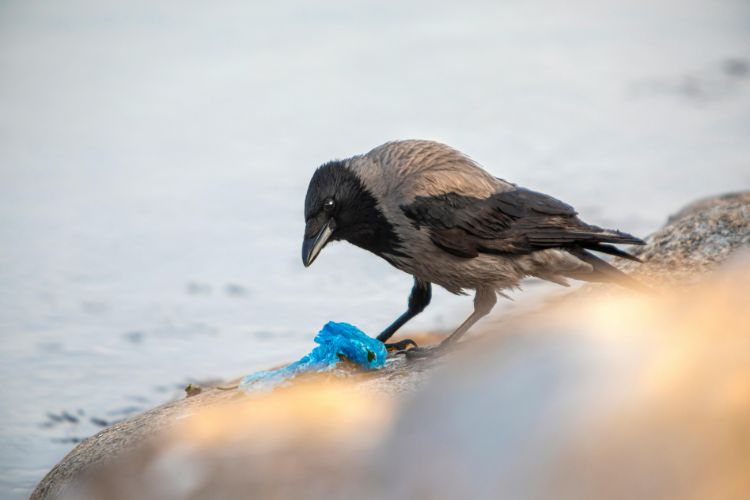
So when they went on walks around the campus, they would go out with litter-picker tongs and gather litter from the waterway.
That became part of the routine of their walk. But the children’s center actually took that a step further.
Because the children were so concerned that they decided to design some rubbish bins that the birds couldn’t get into. These were three- to five-year-olds, designing bird-proof bins.
One of their designs that really caught my attention was a bin that used centrifugal force. The bird would land on the edge of the bin and the bin would start spinning. The bird would get spun off the bin.
So sometimes even very young children have really creative ways of taking action and being involved.
4. PRACTICAL TIPS FOR RAISING CHILDREN WITH LIFELONG SUSTAINABILITY HABITS
Are there any specific strategies or practical tips you recommend for parents to encourage a lifelong commitment to sustainability?
Earlier, I mentioned modeling behaviors; but alongside that parents can also talk to their children about what they’re doing and why they’re doing it.
When you’re emptying your water bottle, empty it in the garden, not down the sink, and at the same time explain that you’re doing it because that water can give life to the plants. That helps children understand the decision making process, and the ethics that are involved in every day choices.
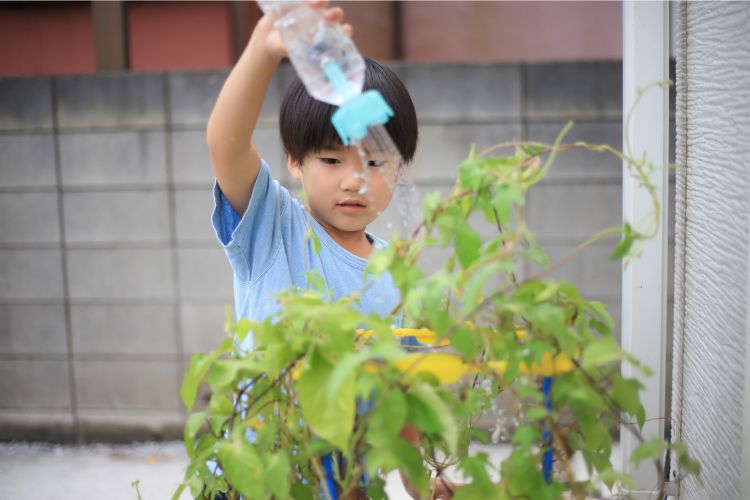
Also, we’ve become a very disposable society, and so repurposing and repairing are approaches that children could become familiar with early on.
Another interesting strategy is simply pointing things out. I often babysit four-year-old twin boys. I’ve got an electric car, and they’ve recently got an electric car at their house.
We’ve had lots of conversations about electric cars. I live in Australia, and we’re required to have a little blue triangle on our number plate that tells if it’s an electric car, not a petrol [gas] car. Since I told the boys about that blue triangle, when I go out with them anywhere, they’re always pointing out the electric cars: “Look, there’s another car with a blue triangle on it.”
And with children, you only have to point something out once, and they will look for it everywhere.
Another thing, which is particular to travel: lots of children go for beach holidays, and invariably, they want to bring home a bag of shells. So you can teach the idea of “Leave only footprints; take only photographs,” and “Don’t take any shells, because shells are habitats for other animals.”
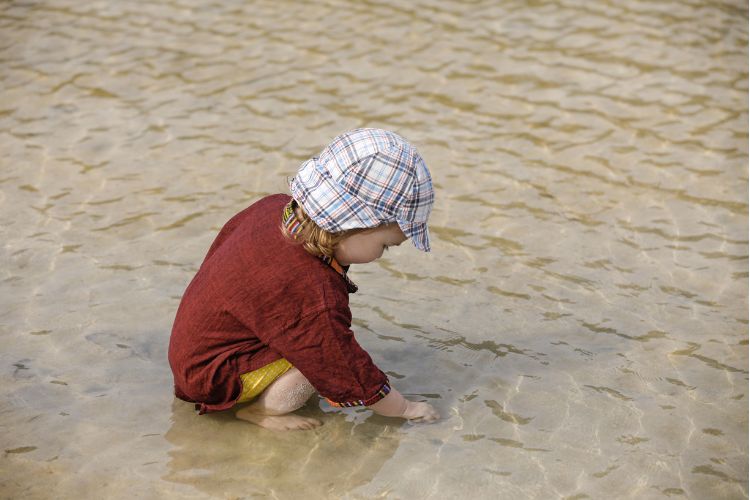
Or when they’re building a sand castle, have them think about “Do we pick plants to decorate our sand castle or our mud castle? Or can we find sticks or leaves on the ground that we could use, without picking plants?
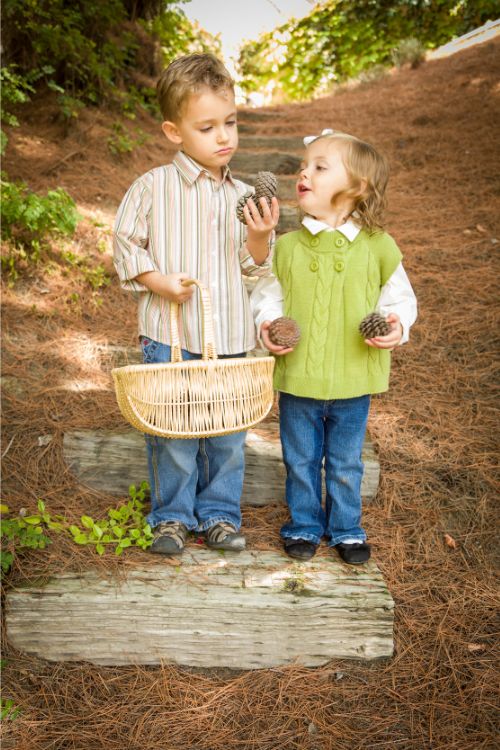
Another thing that’s great fun for toddlers is pegging [hanging] the washing on the line. Toddlers love pegs [clothespins].
And it’s an activity that can help them practice one-to-one correspondence, which is a mathematical concept that young children learn. You’ve got two shoes, and one shoe goes on each foot. That’s one-to-one correspondence. Or in the case of pegging clothes on the line, one peg to one sock.
So try pegging washing on a line outside, rather than putting it in a clothes dryer, if your climate permits.
In the three-to- five age bracket, looking for triangles, arrows for recycling, or the numbers associated with the types of materials they’re made from can all be part of learning the literacy around recycling and waste.
For all ages, gardening is usually a very popular activity. Even if you just have potted plants on a balcony, your child can have their own pot.
If it’s infants and toddlers, herbs are really good because of the sensory aspects of the herbs. With older children, it might be growing a tomato plant, or sunflowers or beans, or whatever the child might be interested in.
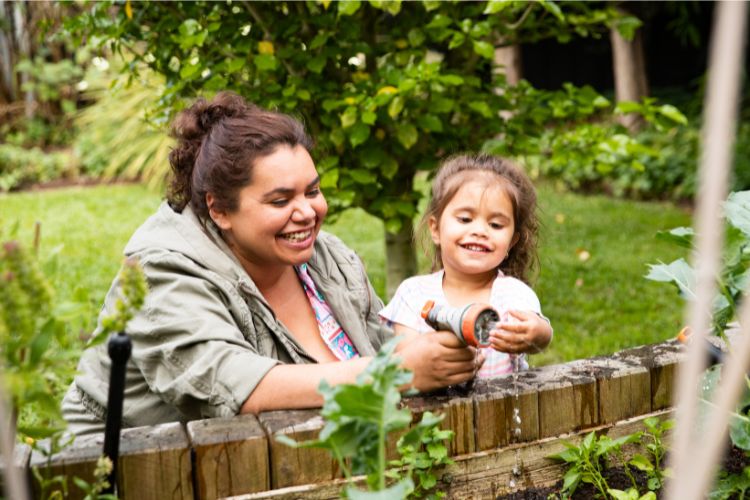
It teaches the ethic of caring, but also it leads into notions of seasonal produce and food miles [the distance food travels from where it is eaten] as well.
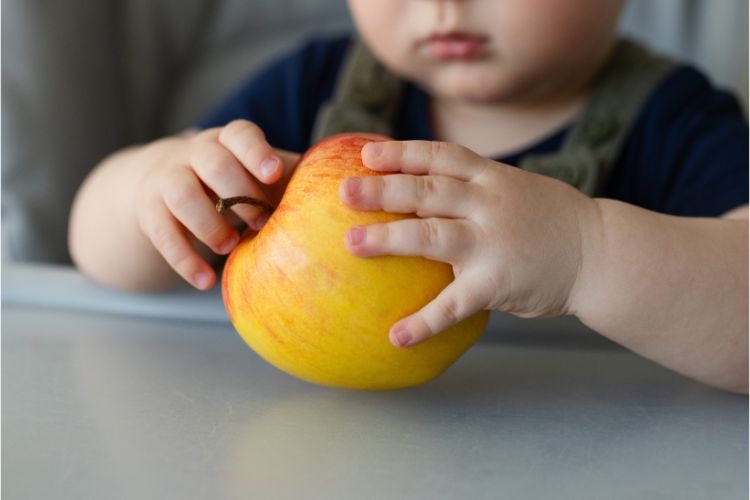
Getting your child in touch with where produce comes from is important. Once I was eating morning tea [breakfast], and there was a young child who had an apple. I asked the child “Where did the apple come from?”
The child said, “Oh, it came from the supermarket”.
And I said, “Well, where do you think the supermarket got the apple from?”
And the child said, “Oh they got all this yellow stuff and squashed it together, and then got this other yellow stuff and squashed it on the outside to make a yellow apple.”
So helping children understand that an apple comes from a tree, or a bean comes from a plant, is something really important that parents can be doing.
If you can create an understanding within children of where food comes from, and they actually produce the food themselves, it has economic, social, and environmental sustainability aspects.
6. HOW TRAVEL CAN HELP CHILDREN LEARN TO CARE FOR THE PLANET
Finally, I’d like to concentrate on travel. For a long time, people have been getting more and more interested in and aware of sustainability in general, but they’ve sort of thought of vacation as a break from real life. As if vacation is for relaxing, so you don’t have to think about all that.
But now it’s slowly becoming part of the conversation that “Oh, actually, I’ve got to think about this even when on vacation, because these issues don’t pause just because I’m traveling.” Enough people are starting to realize, “Okay, I need to travel responsibly.” So I’m wondering how parents can pass these values down to their children?
Travel is not my area of expertise, but your question does provoke me to think about it.
Firstly, the destination you choose is a big part of your impact. Very commercialized types of resorts or theme parks are probably not places you’d go if your focus is responsible travel. If you decide that you’re going to a theme park, I don’t think that’s going to do very much good for the environment, at any level.
One thing our family did was a house swap overseas. When you swap with another family, you immediately have a group of friends, young children for your children to play with, and local people in the neighborhood that will tell you where to go, or how to fix something if need be.
My children were eight and 11 when we did six months overseas house swapping, and we went to three different countries. We went to Edmonton, Canada in the winter, so they learned how to make snow angels, and they went to school in Canada. Then we went to Quito, Ecuador. So they learned about the Andes, the rainforest and the cloud forest. And everything was so very different. Our third swap was in Denmark, on the beach in summer.
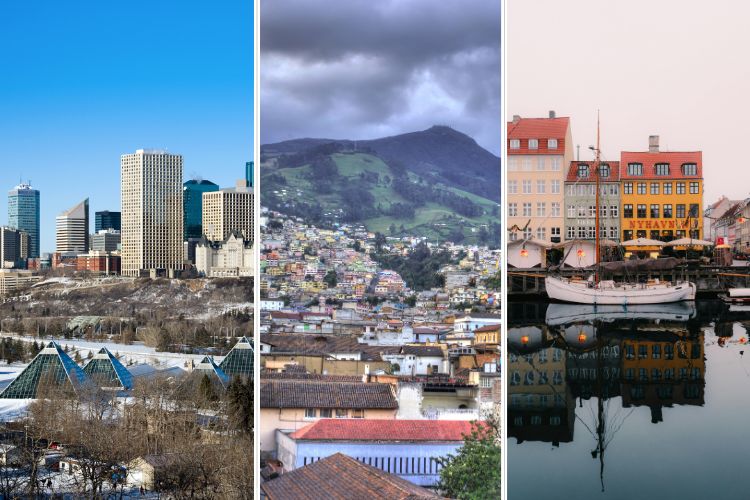
Children grow so much with travel. They learn so much when they’re out of their usual context. So we really enjoyed house swapping. It was a great way to become embedded in different cultures and understand the ways that different people live. And now there are websites where you can organize house swaps.
Secondly, of course the type of transport that you use is an important choice. Can you travel by train rather than flying? Can you go by bicycle?
Another good thing is keeping a travel diary with children, so that they can recall the different things that they’ve seen. It could be a travel nature diary of different plants and animals that you’ve seen along the way.
I remember hearing about a young child whose mom took him whale watching, and how impressed he was at his first sighting of a real live whale. Because you can look at picture books of whales. But until you are face-to-face with that animal, seeing a whale that close up, it’s very difficult for a child to understand just how big they are.
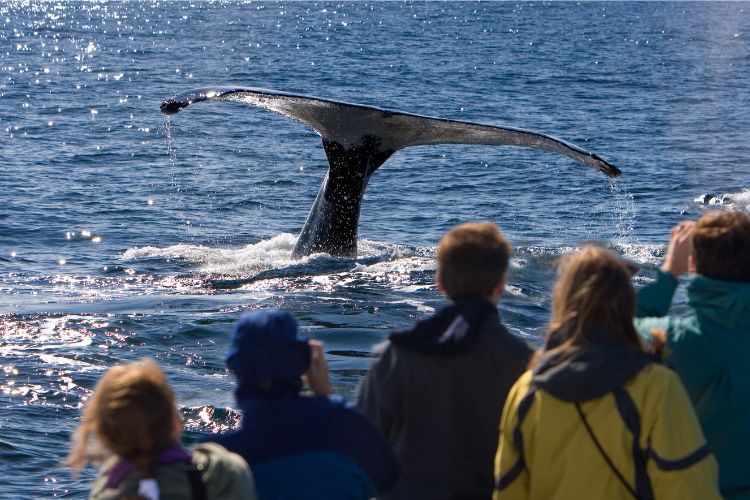
So gaining that perspective on and appreciation of the natural world can be an important lesson from travel as well.
Which leads me to another point. I don’t know whether there’s such a term as slow travel?
There is! We actually have a two-part interview here on Mindful Wayfarer with Carl Honoré, the godfather of the Slow Movement. Part One is all about Slow Travel in general, and Part Two is about his children’s book on Slow Travel.
Oh really! Well, the slow concept has been applied to education, to what we call Slow Pedagogy: slowing down teaching and learning to the child’s speed.
Adults tend to be involved in fast travel: “I’ve got to get from A to B as quickly as possible.”
But slow travel is so important for children. They need time to observe and reflect on things, and really engage in experiences.
About Sue Elliott

Dr. Sue Elliott is an early childhood education researcher, author, and sustainability advocate based in Australia. She serves as an Adjunct Senior Lecturer in Early Childhood Education at the University of New England (UNE) in New South Wales, and also holds a visiting scholar position at the University of Cincinnati in the United States.
Her career in the field spans over 25 years, extending from early years practice to international research and consultancy in sustainability, outdoor play, and nature-based learning.
Dr. Elliott began her professional journey as an early childhood educator and went on to work with organisations such as the Royal Botanic Gardens Melbourne and Museum Victoria, developing early childhood programs that connect young children with nature.
She has led and collaborated on funded research projects that explored children’s outdoor nature play experiences and education for sustainability across Australia and beyond. Sue was honoured with a Fellowship of the Australian Association for Environmental Education for her leadership in the field.
She has co-edited texts including Davis, J. & Elliott, S. (Eds.) (2024). Young Children and the Environment, and co-authored works such as Early Years Learning in Australian Natural Environments.
Her research and practice emphasises how families and educators can nurture children’s connection with the environment and instill sustainability values from the earliest years.