
Responsible Rural Tourism: Q & A with Manisha Pande, Co-founder of Village Ways

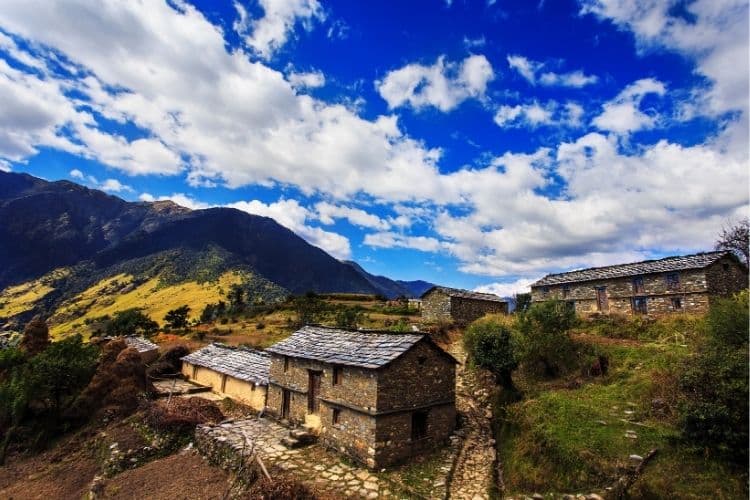
House in Uttarakhand

INTRODUCTION


Rural tourism is not just about visiting villages or seeing what life is like outside the city. It raises deeper questions about how people from very different worlds meet, interact, and share space.


In rural areas, traditions, livelihoods, and the environment are closely linked, which means tourism can have strong effects, both good and bad. A trip might create income for families or encourage conservation, but it can also disrupt daily life or strain local resources if it isn’t handled with care.


For travelers who want to act ethically, this makes rural tourism both an opportunity and a responsibility.


To understand what’s at stake, we spoke with Manisha Pande of Village Ways, which has been developing Village Tourism Enterprises in remote rural regions since 2005.


She shared insights on how rural tourism can succeed when it is shaped by the communities themselves, and how travelers can take part in a way that supports, rather than harms, the places they visit.


Thank you, Manisha!


RESPONSIBLE TOURISM: Q&A WITH MANISHA PANDE, CO-FOUNDER OF VILLAGE WAYS 


Note: The following responses have been edited for brevity while preserving their original intent.


1. VILLAGE WAYS AND ITS APPROACH TO RESPONSIBLE RURAL TOURISM 


Manisha, thanks for taking the time to speak with me. You’ve been involved with responsible tourism and rural tourism for over 20 years. Let’s talk about [the rural tourism company you co-founded], Village Ways. Can you tell me a little bit about what Village Ways does and how it collaborates with rural communities to ensure they’re involved in the decision making about tourism and its impact?


Village Ways started in 2005 with five villages. These villages were inside a wildlife protected area.
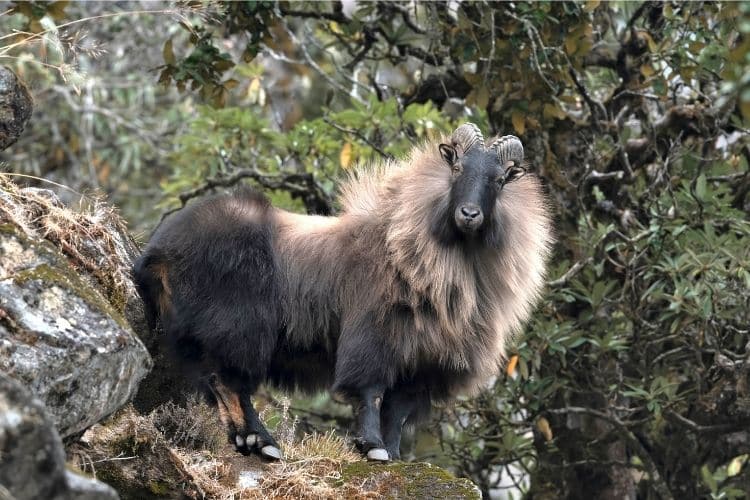
 

Himalayan Tahr

Once anything is a wildlife protected area, many laws come into effect. There can be a lot of problems for the local communities in regards to raising their animals and so on and so forth. Survival within that area becomes very tough. So the idea behind Village Ways was: how we could stop outmigration from these villages in search of livelihood? Which was the major problem at that time.


Our whole concept came about in order to use tourism to help those five villages. We developed the tourism enterprise, we trained the communities to run it, and helped them to market it. So tourism became a tool to give people an alternate livelihood source.


The key to our concept was always not to engage individuals, but to have the guest houses community-owned and -run. A big challenge for these communities was that people from outside were coming and buying up the land. And because the communities needed money, they were losing the land at petty prices.


So to stop that, our policy was not to buy any land, but to make sure that whatever guest accommodation we developed for the community in the village was collectively owned.


In our destinations, we form a village Tourism Committee, which is designated to run the guest houses. At least one person from every household in the village is on the committee. And to make sure women are included, we reserve a percentage for women to participate in the committee.


We created a standard that had to be met, to ensure the initiatives’ longevity and that it aligned with market demand. We held trainings for the communities to ensure a shared understanding of that standard.


From those initial five villages, we replicated and expanded the concept to about 34 villages right now, in all parts of India, and in Nepal as well.
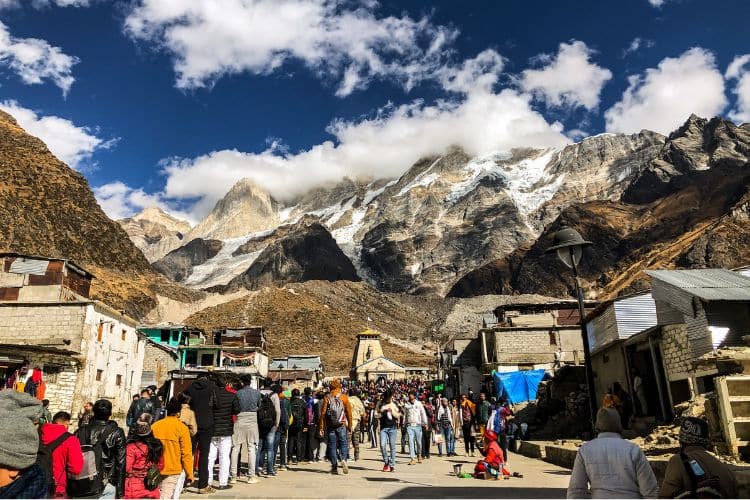
 

People in Uttarakhand


We’ve proven that this kind of community tourism concept, where people are engaged collectively, can run for a long time. And the impacts that we have recorded: social, traditional, and environmental, have all been very positive.
2. BENEFITS TO THE COMMUNITIES


What are some of the biggest benefits of rural tourism for the local communities?


First of all, there is the direct economic benefit that goes to the villages. Using a model where tourism is developed collectively is always better. That’s what Village Ways does: we work with the entire community, not with individuals.


If you work with individuals, the benefits only reach a few people, who probably already had the resources to participate in the first place. Whereas with a community model, you develop a structure of benefit sharing. But you also create a shared responsibility to make sure that nothing bad happens to their village. They set up principles to follow. With the individual approach, there are bound to be cases where people break those policies just to please a customer.


The second benefit is that for every tourism effort, the local community will need to undergo some training. Therefore, they enhance their current abilities or acquire new ones, which increases their pride and confidence.


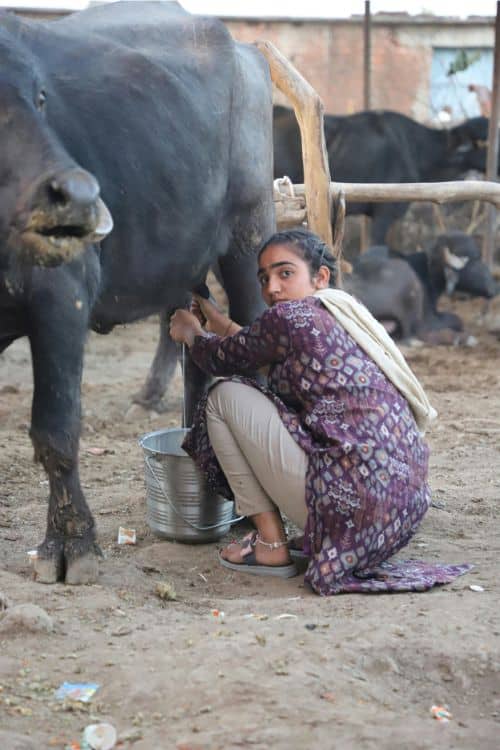
I’ve also seen that it is a good tool for empowering women. They get involved in the hospitality aspect and in managing finances. So it can be very fruitful for the women who participate.

Another thing that’s also very important is that sometimes modernization tends to erode traditions and culture.


But through rural tourism, the host communities start to see the value of their heritage and the cultural practices they’ve lost, and to revive them and take pride in them.


And then there’s the environmental side. As tourism grows, local communities start to realize the value of keeping their areas clean, because there is so much information coming to them, sometimes even from the guests.


But I emphasize that it has to be done responsibly, so that the type of traveler who visits respects the local area. And if rural tourism is done this way, the impacts can be phenomenal.

Woman in India Milking Buffalo

3. EFFECTS ON THE VILLAGES – EXAMPLES


Do you have any case studies of changes you’ve seen in a specific community or village due to rural tourism initiatives?


There are many examples. But I’d like to share a couple from our first five villages in Binsar [Wildlife Sanctuary in Uttarakhand], because the situation there was quite difficult, especially the relationship that the local community had with the forest around them.


In a way, the forest had become their enemy, because they were inside a protected area, and that brought about certain rules and regulations. So their relationship with the forest was very strained at the time we started working there.


We trained local guides. Boys who had left the villages to work in cities doing menial jobs came back, some of them got trained as guides. We trained them in English and the local flora. They started working with the guests, earning a decent living from this job and also earning respect from the travelers. They became almost ambassadors of Village Ways, as they were walking with the guests for many days.


We observed that guides who were once very unhappy with the forest around them started to rebuild their relationship with it, because they understood that the guests were coming because they appreciated those forests.

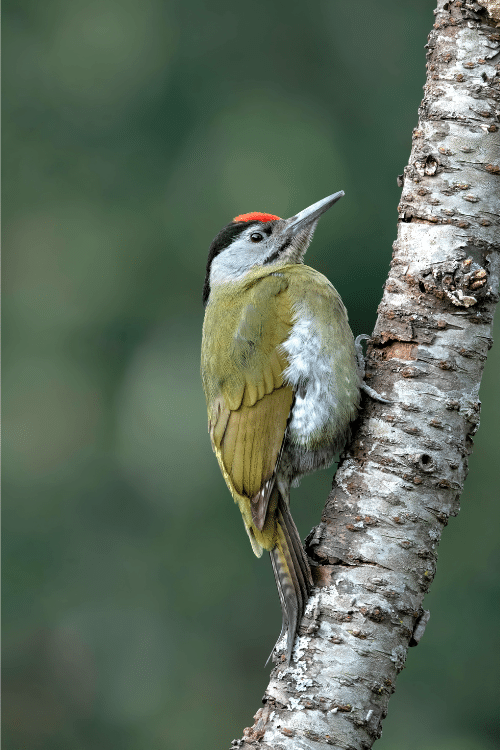
Bird woodpecker Uttarakhand India

There were guides who said that when they were kids, they would throw stones at the birds to try to kill them. But now, whenever they see a bird, they open the book to find out what kind of bird it is, so they can show it to their guests.


The forest department reported an increase in the number of animals, because they said that the guests who were walking in the forest were actually acting as a patrol. So illegal logging has gone down.


So I think there’s been a shift, the communities have rebuilt their relationship with the forest and the environment around them, and they understand why it’s important to protect it.


That’s one very big thing that we’ve seen in the Binsar Sanctuary.

Generally, when we work in a village, initially the participation from women is lower, because there are social taboos around tourism.


But when people see this community tourism model where guests are not staying in someone’s home, but rather in a separate guest house, and people can work at set times and look after the guest with dignity and respect, they start to build confidence in it.

In all our villages, we have seen a marked increase in women’s participation, compared with what we were seeing at the beginning.


So in Binsar, for example, we see women not only becoming guides and treasurers or cooks, but some of them are now porters.


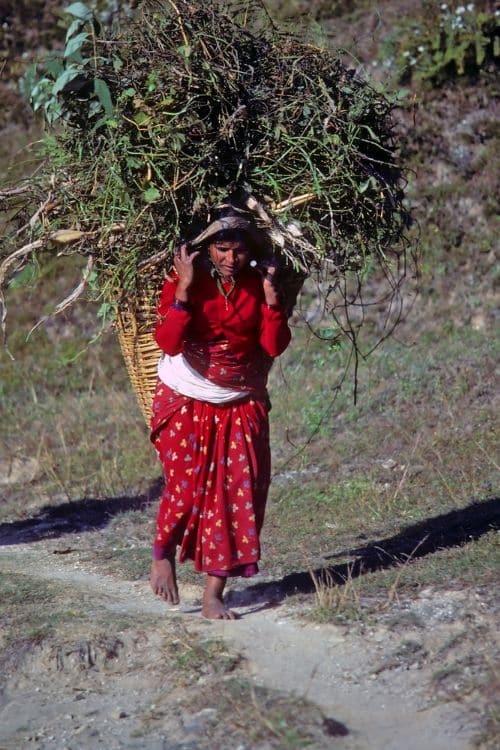
Porters are the ones who carry the guests’ luggage from one village to another, because there are no roads in these villages. It is considered a very male job.


But now, women also work as porters. And when they come back, they bring grass for their livestock. So they are earning money on the way there, and on the way back they bring resources.

Woman carrying grass in Nepal

Apart from that, in one of our areas in South India, we have a Tourism Committee that is almost entirely made up of women. After a couple of years of participating in tourism, they started the first drumming group made up entirely of women.


Drumming is usually done by the male folk in their village. It is traditionally done in temples. But this particular group spoke to the community, and they were allowed to perform in the temples. So they broke that social norm.
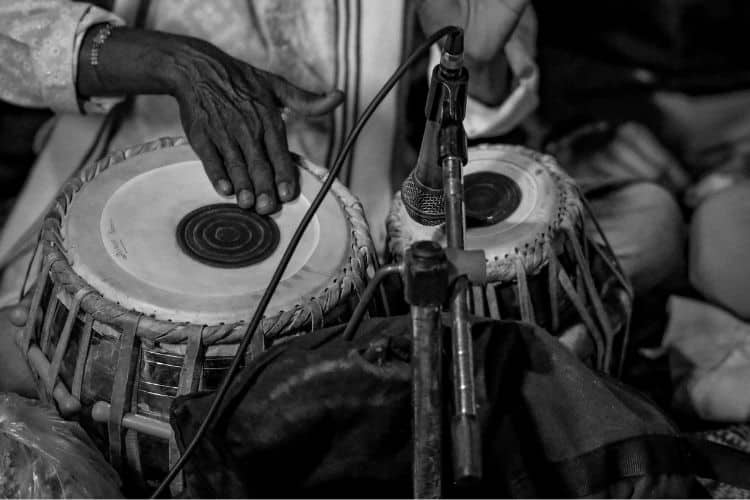
 

Tabla Drummer


Nowadays, they also earn by performing for our guests, as well as performing in religious festivals and even traveling out of state. So in a way, tourism can empower people. Many times it helps to break down social barriers, because they get exposure to the outside world.


When the hosts see that there are women coming as single travelers to the villages, they can’t believe that there are actually women who can travel on their own, without social bias. And when they welcome and exchange with these guests, it can open their mind to that kind of empowerment for women.


For example, we have a system of keeping a fund, where the community saves profits to use for village development. What they use it for is totally up to them. In one coastal fishing village, the community decided that those who have a female child will be given a certain amount to promote their education, because girls are generally not given priority in terms of education.


And there are numerous stories where we have seen these kinds of social changes.
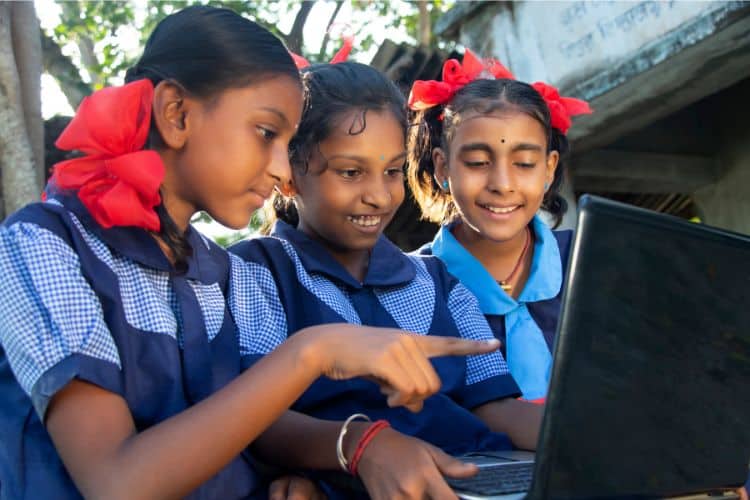
 

Indian Schoolchildren

4. CAVEATS


We’ve talked about the benefits of rural tourism, which are significant. But let’s discuss the caveats.


As much good as rural tourism can bring, it can also bring bad. You are giving tourists access to the most vulnerable and sensitive areas, to stay with communities which have been totally cut off from tourism.


The operator who brings the travelers to the villages has a good amount of responsibility. If there is a mismatch between expectations and reality, there can be dissatisfaction on the guests’ side or on the hosts’.


The operator needs to brief the guests properly. Because they are responsible for bringing travelers to the area, they need to be sure they explain what visitors need to know to behave as responsible guests in these villages. It’s so important that guests are aware of the impact they can have, so that they don’t leave negatives behind that could harm the area or the whole social structure of the villages. And that they respect the boundaries of what is acceptable or not acceptable where they are visiting.


The hosts, too, have to be fully aware of the standards that the guests find acceptable. And they have to decide the rules of what they expect in return as social norms, and what they prefer not to happen in their village. It’s important that the hosts are the ones who make those decisions. That can be anything, even basics like how visitors are expected to dress in the village.


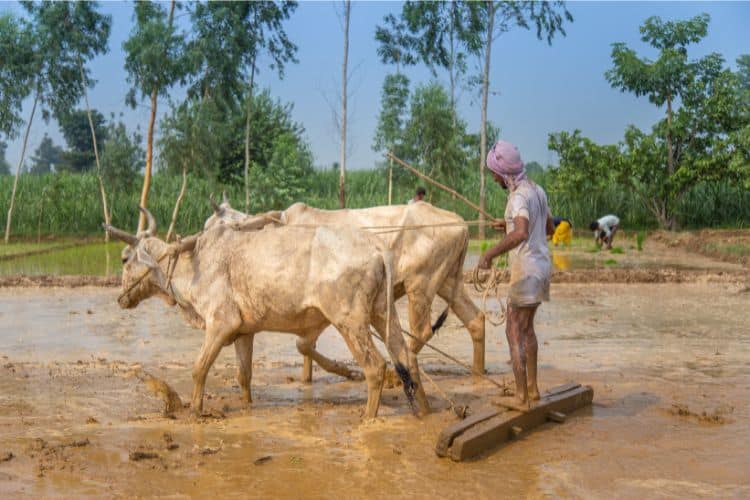
As a source of livelihood, the key is that tourism remains a gap-filler. People should continue their traditional practices, with tourism providing a supplemental income. It should never become the main source of income for the village. Because if that happens, they are in danger if suddenly there is a problem like COVID.

Farmer in Uttarakhand, India


Another problem for rural areas is the seasonality of tourism: they can’t depend on it year-round. But again, as long as tourism is just a supplemental income, it can be a sustainable model.


5. WHY TRAVELERS SHOULD CARE ABOUT RURAL TOURISM


Why should travelers be interested in rural tourism? And what do you think the benefits are for travelers who decide to visit rural areas?


Let’s continue with the example of Village Ways. We have many repeat guests who come over and over again, sometimes seven or eight times, and visit the villages. We ask these guests what has been the highlight of their trips, and what makes them keep coming back.


It seems that first of all, one major highlight is the privilege of being in areas which are far away from the tourism spots people generally visit. Visiting unique and beautiful areas which are, compared to other places, less explored.


The other highlight of their experience is the opportunity to interact with local communities in a natural way. So they are also getting a glimpse of real traditional practices.


These trips are always full of surprises, you are not bound by the standard itineraries where you have a fixed day ahead. I think all those elements make it a very unique experience.


6. RURAL TOURISM AND OVERTOURISM


I’d like to talk about overtourism, because that’s a big problem in traditional tourism. But with rural tourism, these locations are off the beaten path. Are they still vulnerable to overtourism?


Yes, very much. I think these locations are very vulnerable to overtourism. Again, one important principle is that tourism has to remain an alternate source of livelihood. If they become too dependent on tourism, that will disturb the balance between the population and the visitors, which will derail the system there.


So the decision needs to be made as to what is the capacity of that rural area to accommodate travelers. And again, it’s a collective decision. It’s not something that someone from outside should impose on these communities.
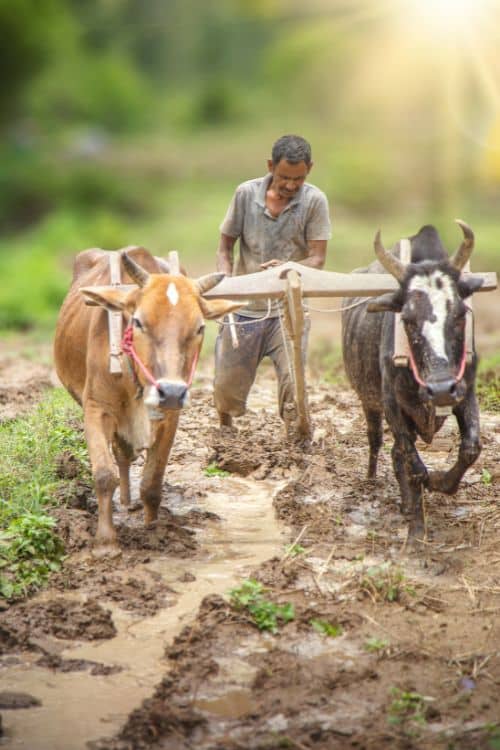
Farmer in Uttarakhand

But you have to also account for the fact that when income starts to come in, it’s natural for people to think if some is good, then more is better. And to want more and more visitors to come to the villages, because that means more income.


So how do you stop that?


From the beginning, you must make sure the community is aware of the issues which can arise if too many people come to their villages.


From day one, you have to emphasize the importance of keeping tourism as an alternate livelihood. Explain to the local community why it’s important to continue their traditional practices. So they have the information they need to make those decisions about themselves.

And it’s not just important for them. Those practices are the reason travelers choose rural experiences in the first place. If you lose the traditional practices, the whole experience will be of no interest. Visitors are not coming for accommodation. They are coming for that holistic experience.


7. THE FUTURE RESPONSIBLE OF RURAL TOURISM


Last question, what do you think is the future of responsible rural tourism, and what role do travelers play as individuals in creating a more sustainable model moving forward?


It’s looking quite positive right now. In terms of traveler preferences as well as the government and the travel industry, everyone seems to be supporting the idea of rural tourism.


Things have changed drastically compared to when we started 20 years ago. At that time, there was nothing to compare and learn from. But now I think there are many people who are trying to do work in rural tourism.


Also, responsible tourism is becoming a very serious movement, especially in India. I also work with the International Centre for Responsible Tourism, I work for the Indian Foundation, and I’ve been working with several state governments. Everybody has started taking responsible tourism quite seriously, because they understand that tourism needs checks and boundaries, and destinations need to be developed sensibly, keeping in mind the environmental, social and cultural considerations. And they are also realizing that distributing tourism away from tourism hubs is essential to avoid overtourism.

But having said that, I would stress that as I said, rural tourism is also prone to overtourism, so we have to be very, very careful about how it’s built up.


In terms of the traveler’s role, they are key to the success of rural tourism. Because if no one visits these villages, nothing can happen for the communities. But since they are visiting the most vulnerable and sensitive areas, their role goes beyond simply enjoying a tourism experience.


Above all, travelers must remember that rural tourism isn’t about the amenities. These are not going to be five-star luxury hotels.


But done properly, rural tourism can be a very comfortable experience for guests. If they go with an open mind, they will have the most beautiful experiences they can imagine.

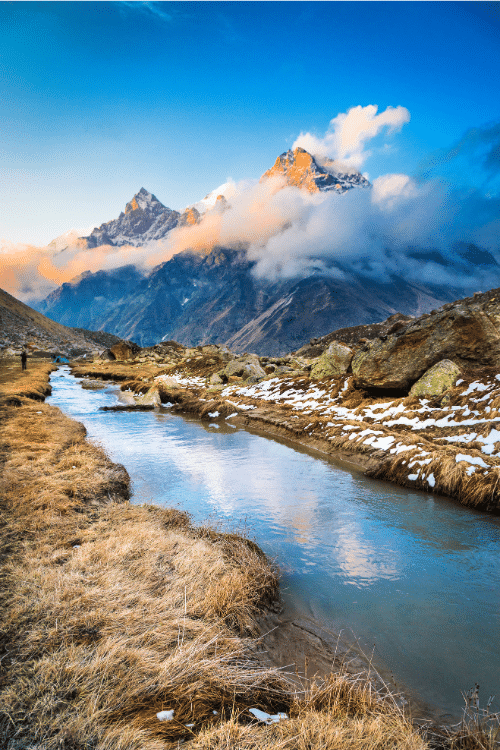
Mountains in Uttarkhand
About Manisha Pande:


Avatar


Manisha Pande is Co‑Founder and Managing Director of Village Ways, a pioneering responsible tourism enterprise launched in 2005.


The organization has established community‑owned village tourism enterprises across India, Nepal, Bhutan, and Ethiopia, helping to create sustainable rural livelihoods while preserving local cultures and landscapes.


She is also a founding member of the International Centre for Responsible Tourism (ICRT) India Network, where she contributes to shaping responsible tourism policy and supporting community capacity building initiatives.


Under her leadership, Village Ways has received several prestigious honors, including the World Travel Market Responsible Tourism Awards, the Guardian Travel Awards, the Times Green Spaces Award, and the British Guild of Travel Writers’ Award.


Manisha continues to work in close collaboration with state tourism boards, forest departments, wildlife charities, and various NGOs, ensuring that rural tourism remains ethical, inclusive, and sustainable.

About Mindful Wayfarer

Welcome to Mindful Wayfarer, where we believe that travel is more than just a journey. It’s an opportunity to make a meaningful impact.

Table of Contents