

1. CAN TOURISM KEEP GROWING WITHOUT BREAKING THE PLANET?
GM: Let’s move on to the question of balancing tourism growth and sustainability. A core tension in your research is about reconciling the idea of growth in tourism and meeting climate targets. Can you talk a little bit about why these are so difficult to reconcile?
JH: The simple reason is that, in many cases, growth is inextricably linked to tourism’s impacts. So the more growth we have, the more likely it is that the impacts will be challenging to manage and mitigate.
National governments and national tourism organizations typcially encourage growth. Year-on-year growth, as measured in terms of visitor arrivals, expenditures, and the economic contributions of tourism, is seen as an obvious measure of success.
But that is a trajectory that will ultimately strain communities, destinations, environments.

If we think about the social dimensions of tourism: Over the last 10 years we’ve seen the rise of overtourism concerns in many popular tourism destinations such as Barcelona and Venice, particularly in highly-seasonal tourism destinations.
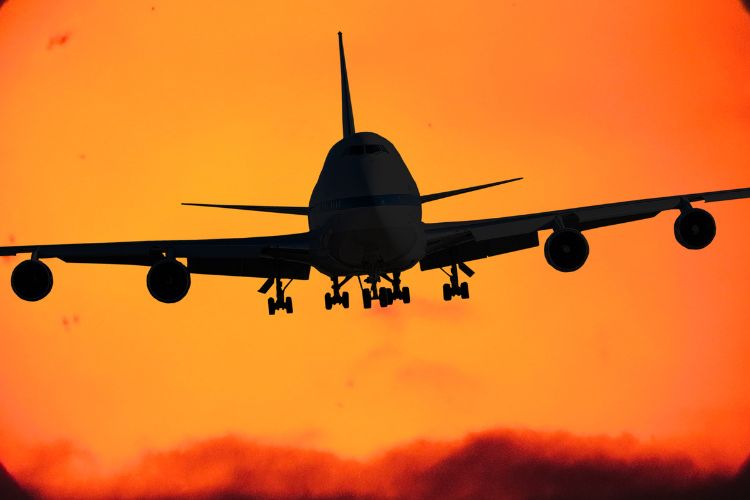
The other reality is that growth in transport demand and growth emissions remain closely linked, with little sign of changing in the years ahead. That is another complexity we face when it comes bringing tourism emissions onto a downward and sustainable pathway, which is generally seen as being incompatible with sustained high growth in tourism.
GM: What would a low-carbon tourism system look like in practice?
JH: That’s the nub of the issue. It’s a difficult question to answer because, as we know, tourism is a complex system made up of many moving parts.
If we think about aviation, there are various leverage points that we could target to try and resolve the problem of high air travel emissions, such as frequent flyer programs, which have been instrumental to this acceleration of tourist demand.
You mentioned at the start of our conversation that tourism has become more accessible over time. But we have also found that with growing affluence, those who have access to tourism travel more. So part of the issue here is not so much that more people are traveling, but that those who do travel are traveling more.
Trying to restrain that demand amongst frequent, high-volume travelers is a big part of both the challenge and the solution here. Some have said that we need differential pricing for those who travel frequently.
Over time, we have seen increasing blurring between work and leisure travel, as they often are combined. But that said, there are different mechanisms that might apply to people who travel for work versus those who travel for leisure.
Studies have shown that conference-related emissions can be significantly reduced by prioritising attendance from people who can travel by low-carbon means. Those who would need to fly long-haul or intercontinentally could instead attend regional conferences or regional hubs, or participate online, which would substantially reduce the carbon footprint of conferences.

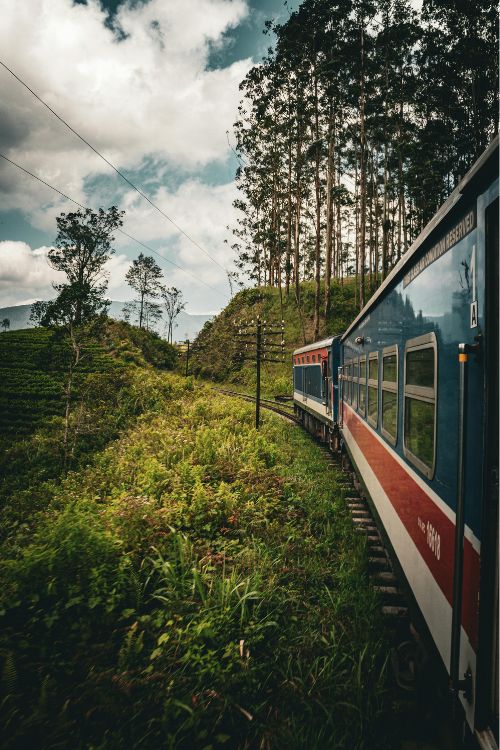
That can certainly show up as finding ways to travel less frequently but for longer. If we can travel overseas once every three years for a month rather than every year for a week, we’re actually increasing the volume of our travel to four weeks rather than three, but significantly driving down the emissions associated with that travel.
Another option is choosing closer to home destinations. That immediately and significantly reduces the carbon footprint of our travel decisions. We saw this during COVID, when people were able to rediscover their own countries and places much closer to home.
When you’re at the destination, whether it’s nearby or further afield, the decisions you make matter. For example, in the last 10 years or so in New Zealand, we’ve seen a huge upswing in demand for cycle tourism. This has been triggered by very conscious government decisions about investment in developing cycle infrastructure, trails and networks.
It has proved to be phenomenally successful, and the numbers of people who are now engaging in cycle tourism has grown significantly.

They travel by low carbon means. They travel more slowly. They travel in a way that is more locally engaged and immersive. They tend to stop regularly, and when they stop they’re often participating in things like wine tours or visiting cafes. They’re spending in local communities. Sometimes they’re supported by businesses that facilitate their cycle tours. They may be renting bicycles.
The rise of e-bikes has made cycling much more accessible. They allow couples with different cycling abilities to ride together, and make cycle trails more accessible to retirees, who are generally less constrained by time and can therefore spend longer on their trips.
There are barriers, as annual leave provisions typically limit the amount of time most people can spend travelling. However, if employers offered longer blocks of leave, such as sabbatical-like periods, people would have more opportunity to take extended trips. A four-day working week could also give people more time to focus on destinations closer to home over long weekends, rather than waiting to have a week or more of annual leave, then flying off to distant destinations to make the most of limited time.
3. WHO IS RESPONSIBLE?
GM: We’ve been talking about personal responsibility, but in one of your podcast episodes you referred to research arguing carbon offset schemes can be a ruse to “transfer the guilt, accountability and cost of emissions from airlines onto the individual.”
How much of this should be our individual responsibility, and how much of this is a systemic issue?
JH: It’s a combination of the two. There is an urgent need for individual responsibility. But because of the systemic nature of much of what we’re talking about, there are limits to what we can achieve individually.
In some cases, travellers simply do not have sustainable options. Even where they do, the decision-making process is not a level playing field.
In parts of the world, such as Europe, people can choose between flying, driving, or using public transport such as trains or overnight buses.

Unfortunately, the least sustainable option, air travel, is often the cheapest and most convenient. Catching a train and then a ferry to arrive at an island in the Mediterranean is going to chew into your holiday time much more than flying direct.
Once you reach your destination, renewable energy availability varies. In many destinations, fossil fuels are being burnt, or they are highly dependent on non-renewable energy sources. Some destinations have accessible public transport. Others require the use of rental vehicles.
These are systemic challenges that make it very difficult for people to travel in ways that they may prefer in terms of environmental consequences.
One of the ironies with air travel is that aviation fuel is not subject to taxation. This dates back to the Chicago Convention, a global agreement signed to foster growth of the air travel industry in the years following the Second World War. It effectively subsidizes a climatically unsustainable mode of transport. It allows air travel to be sold at cheap prices that are far more cost effective than more sustainable alternatives.
Technically, it is extremely difficult, if not impossible, to decarbonize air travel. But there is so much that we can do in terms of trying to decarbonize our energy systems at tourism destinations, moving to solar and other renewable energy sources and making low-carbon options more available.
All of this needs to take place in association with individual decision making, so that individuals are empowered to make good decisions.

JH: We know that there’s an association between increasing wealth and increasing travel, and therefore increasing emissions. The wealthiest travellers typically have the highest carbon footprint because they’re more likely to be flying on private jets, sitting on cruise ships, engaging in trips into space, or traveling business class on a far more routine basis than anyone else.

That does, in some ways, make a mockery of those who are more conscious of their air travel decisions, and who factor in emissions and climate concerns in their decision-making processes.
This is where we come to the question of systemic change and the need to rein in what some academics refer to as the “extreme high emitters”. Those are the people who have the wealth to travel without restraint, typically by very high-carbon transport modes, and who continue to do so without concern.
Our governments need to actively manage the emissions of the extreme high emitters.
At the moment space travel is pretty much entirely unregulated. The emissions of private jet users are largely unmonitored and unmanaged. But if we’re serious about the challenges that we’ve been discussing in the last hour or so, we need to make sure that everyone is brought into the equation.
4. WHAT ACTIONS CAN TRAVELERS TAKE?
GM: That brings me to practical pathways for travelers. Where does someone who loves travel, but they’re starting to realize, “I want to reduce my impact,” start?
JH: The key starting point is to begin to internalize the environmental and climatic consequences of our travel decisions. Typically, these factors are given little or no consideration, but we need to elevate them in priority.
I know this isn’t intuitive or easy. But if people can think about the frequency of their travel, the distance of their travel, and the modes of transport they choose. These are excellent starting points. When we begin to think about those things, we find that there are alternative ways of being a tourist. There are lower carbon options.

GM: The road is also hard because there are so many benefits to travel. I do believe that going out of your comfort zone and learning about places and cultures, in the best of circumstances, can foster an open mind.
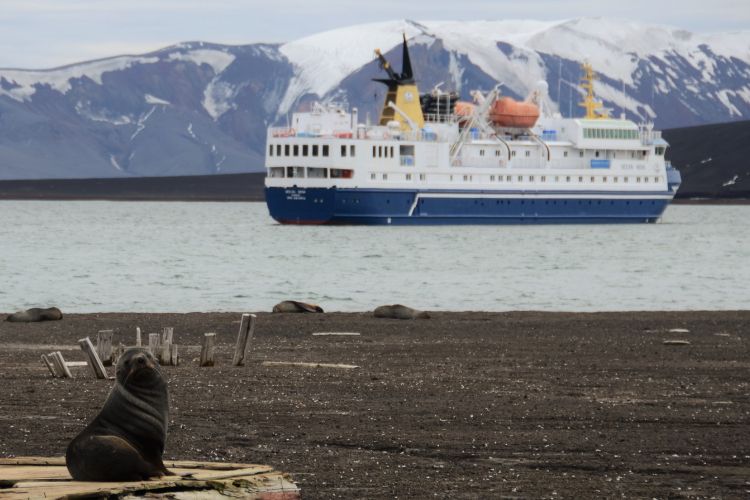
JH: Travel can be a force for good, but we need to think critically as well. For example, for many years, Antarctic tourism operators have sold Antarctic tourism in part on the claim that people who visit Antarctica become ambassadors for the continent, and that for that reason, it’s ultimately good for Antarctica’s protection.
But it’s very difficult to prove if people who have visited Antarctica are actually benefiting Antarctic conservation in any way.
So these claims may sound appealing, and there may be lots of reasons why tour operators want to sell the impression of ambassadorship. But I don’t think we should take it for granted.
There are increasingly new and different ways of engaging with destinations. We’ve long been able to engage through wildlife documentaries, for example. Increasingly, we’re able to engage with distant places through virtual and augmented technologies and experiences that can make us feel as if we’re physically present. That can give people a sense of care and stewardship for distant places they may never have visited in person.

About James Higham

Professor James Higham is Distinguished Professor of Sustainable Tourism at Griffith University in Queensland, Australia, and Co-Director of the Climate Change Action Cluster at the Griffith Institute for Tourism. An internationally recognised researcher on tourism, climate change, and sustainable mobility, he has spent more than three decades examining the relationship between tourism and environmental change, with a particular focus on aviation emissions, tourism growth, carbon reduction, and the transition towards a low-carbon tourism future.
Before joining Griffith University in 2023, Professor Higham spent 30 years at the University of Otago in Dunedin, New Zealand, where he held the position of Distinguished Professor of Sustainable Tourism. He remains connected with the University of Otago as an Honorary Professor and continues to contribute to international research and discussions on how tourism can respond to climate change while preserving the social and cultural benefits of travel.
He is also the host of Checking In, a podcast exploring the key challenges shaping the future of tourism, including climate change, aviation emissions, sustainable mobility, tourism policy, and the pathways towards a more sustainable travel system. You can listen to Checking In on Spotify and here on his website: Checking In with Professor James Higham.