
South Africa’s Forgotten Mountains: Sarah Dusek on Creating a Safari Lodge in the Soutpansberg

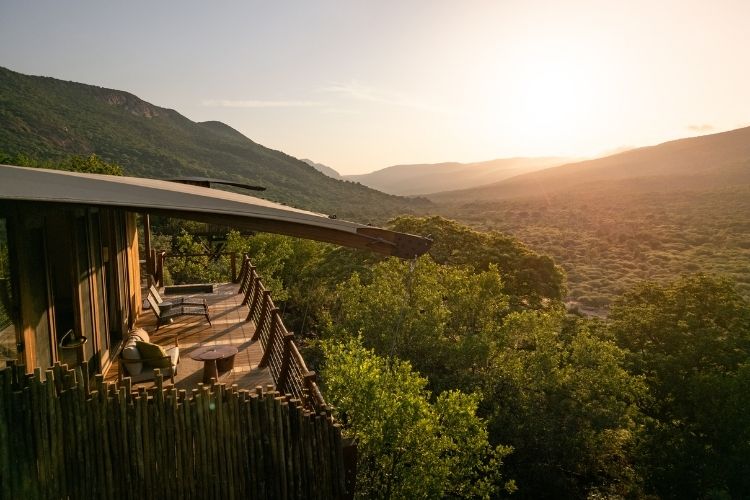
Cliff Suite Verandah

INTRODUCTION


In Part 1 of our conversation with Sarah Dusek, co-founder of Few & Far, we explored the thinking behind the company: why Sarah believes sustainability should be a starting point rather than an end goal, the role travel can play in conservation, and her belief in the power of nature to create meaningful, even transformative, experiences.


In Part 2, we turn our attention to Few & Far Luvhondo, the company’s first lodge, set in South Africa’s little-known Soutpansberg Mountains.


Sarah tells us how she and her husband first came across the area almost by accident, and why protecting it became central to their plans. We discuss the work underway to place more of the Soutpansberg under conservation, and how that purpose has shaped Luvhondo, from the materials used to build the lodge to the experiences offered to guests.


We also talk about what Sarah wanted to do differently from the traditional safari model, what has surprised her since Luvhondo opened, and what she hopes travelers will take away from spending time there.


Ultimately, the conversation asks a bigger question: can tourism help give an overlooked landscape a reason to be protected?

This is part 2 of a two-part interview. You can read part 1 here

SOUTH AFRICA’S FORGOTTEN MOUNTAINS: SARAH DUSSEK ON CREATING A SAFARI LODGE IN THE SOUTPANSBERG

Note: The following responses have been edited for brevity while preserving their original intent.

1) AN ACCIDENTAL DISCOVERY


GM: That wraps up my questions about Few & Far in general. So now we’ll do a deep dive into Few & Far Luvhondo, the first property you’ve created under the Few & Far brand. Why did you choose Soutpansberg as the location? What convinced you it was the right place to bring that vision to life?


SD: It really was an accident. I feel like the land chose us rather than the other way around. During COVID, my husband and I were looking for a little piece of bush. It was my husband’s wish: “Could we find a little piece of bush that we could escape to during COVID?”


GM: You know what that reminds me of? Have you ever read The Secret Garden?


SD: Yes [laughs]


GM: The part where Mary asks her uncle, “Might I have a bit of earth?”


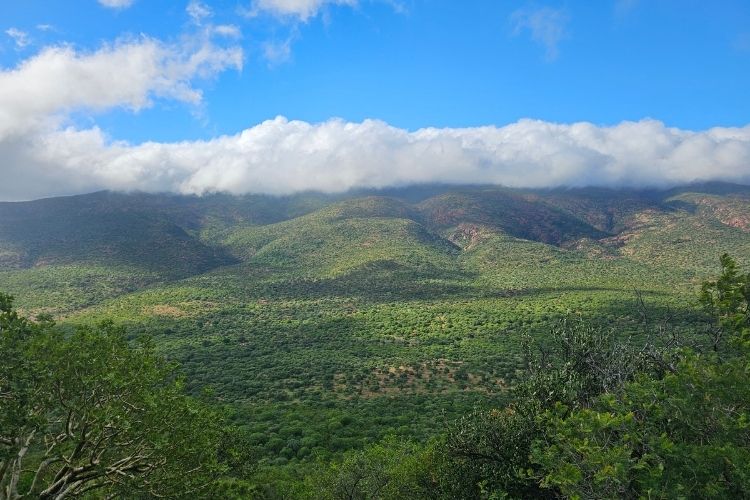
SD: Yes, exactly. Except a lot larger than a garden [laughs], and it was this extraordinary ecosystem, an incredible place that had been largely forgotten and unexplored. We just fell in love with it when we visited for the first time. We realized that there was something very special about this area, and that maybe it could become a future destination for many other people, not just us.


GM: So how did you happen upon it? After all, as you mentioned, it’s not a place that’s generally on the radar.


SD: My husband found it online, and we flew up here to see it. It’s unusual that such large-scale, extraordinarily pristine, raw, wild landscape was not being protected. This area was not, and that just felt wrong. We knew we should become part of the journey to help make that happen.


So, in partnership with the Endangered Wildlife Trust, who’ve been doing work here on the mountain, we’ve now got about 30,000 of the 100,000 hectares under nature reserve, and hopefully we’ll keep adding every year until we’re over the finish line.


The goal is to create a much larger protected area here. It’s been very exciting to see progress being made in that regard.
 

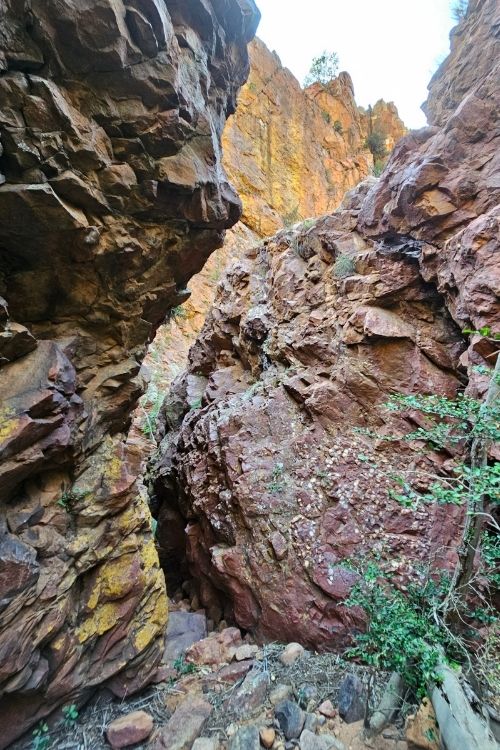
Few & Far Reserve image 5


2) AN ECOLOGICAL TREASURE IN NEED OF PROTECTION

GM: Researching the Soutpansberg for this interview was fascinating. I was reading that less than 1% of South Africa is forest, and the Soutpansberg has the Northern Mistbelt Forest. And yet there are landowners cutting down indigenous forest to plant macadamia trees. Why wasn’t it under conservation already?


SD: In the past, it was a very large hunting area, and there was also mining and commercial agriculture. I can only assume that was because this whole mountain had been privately owned by a selection of different individuals, and it had not been cohesively managed or put together. So now was the time to put this area firmly into conservation because of its significance, and try and protect it going forward.

GM: You mentioned its significance. There are rare and endangered species there. It’s really fascinating.


SD: Yes, exactly. And when land becomes protected, it’s usually because somebody took the initiative to protect it. Either the government made it a national park, or an agency bought up land to protect it. The same has to happen here.


Someone has to take the initiative to consolidate it and put it into protection, so that we preserve these large tracts of extraordinary wilderness. More and more today, we are relying on private bodies to do that because governments largely can’t afford to.

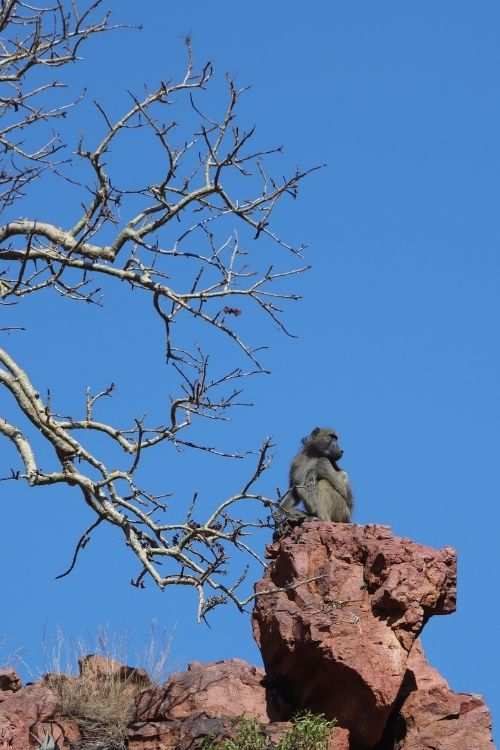
Monkey Soutpansberg

3) CAN A SAFARI LODGE HELP PROTECT A LANDSCAPE?


GM: Having talked about the Soutpansberg in general, let’s talk a bit about lodge. Conservation is woven into Few & Far Luvhondo rather than presented as a separate activity. How did you set out to make it a natural part of the guest experience?


SD: The only reason to build a lodge here was to conserve, protect and regenerate this area. Building the lodge as part of that story was a very natural thing to do. And I feel that when people experience extraordinary wild places, the chances of them then caring about them are much greater.


We really wanted to help people fall in love with this place and create experiences that would help them understand how significant this ecosystem is and how critical habitat this is.

Even in the 18 months that we’ve now been open as a lodge, the amount of leopards that we’re seeing is unbelievable in comparison with when we first opened. Our guests are seeing leopards almost every other day. Just knowing that the habitat here is now safe, calm, and protected for them to move about freely without being worried about being shot, snared or injured has brought them back to this area.


GM: Do you have any other specific examples of guest experience and how conservation is woven into that?


SD: Depending on what our guests are interested in and what they want to experience, they can be part of our initiatives.


Any time guests want to learn about the restoration work we are doing here, they can get hands-on with bioblitzing or placing camera traps to be able to track animal behavior. They can get stuck in to joining our teams and becoming part of the work we are doing, rather than just observing us.


4) RETHINKING HOW TO BUILD A SAFARI LODGE


GM: I’d like to discuss how you built the lodge. It must have been an enormous undertaking. What was challenging during the process?


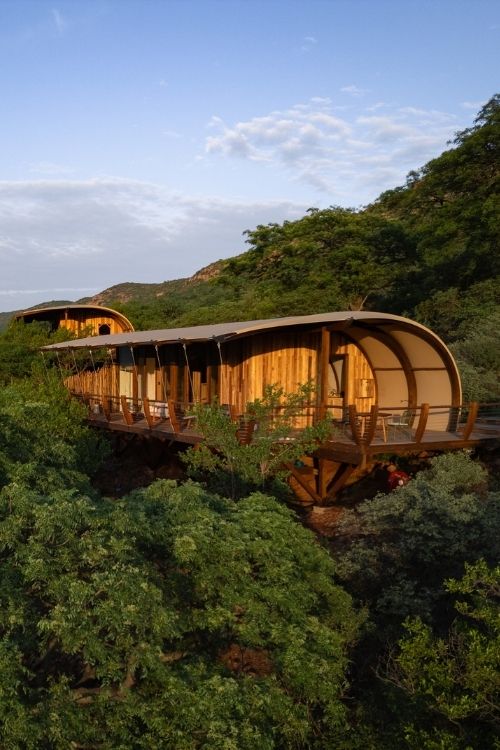
Cliff Suite Exterior

SD: Firstly, we’re in a mountainous area, and to get to the lodge, you climb up and over one mountain, then come down into the valley below. So everything had to be brought over a mountain, including all the wood and building materials.


Also, we realized that most people who build safari lodges in Africa are importing Brazilian hardwood from the Amazon. Even if it’s sustainably produced wood, I thought that was a bit weird. Why bring wood from the Amazon all the way to Africa?


We started work on producing local wood. We took an invasive species here, eucalyptus that grows on the mountain, removed it, and then heat treated it. We spent about a year figuring out the formula to produce a wood that behaved in the same way as a Brazilian hardwood from the Amazon.

 Then we spent about a year manufacturing all the wood to build the lodge itself, a year building the road up and over the mountain so we could get to the spot where we were going to build, and another year building the lodge itself.

GM: So you had to develop the process to treat the eucalyptus to make it a viable building material for the lodge. How did you even come up with that idea?


SD: My husband is the genius in that regard. He’s our resident inventor, and he just has that curious kind of mind. That was a problem he wanted to solve: Could we find a local wood and treat it in a way that created the same properties as an imported wood?


GM: That seems like it could be useful for other businesses.


SD: Other lodges can now buy wood from us. They don’t have to import from the Amazon anymore.


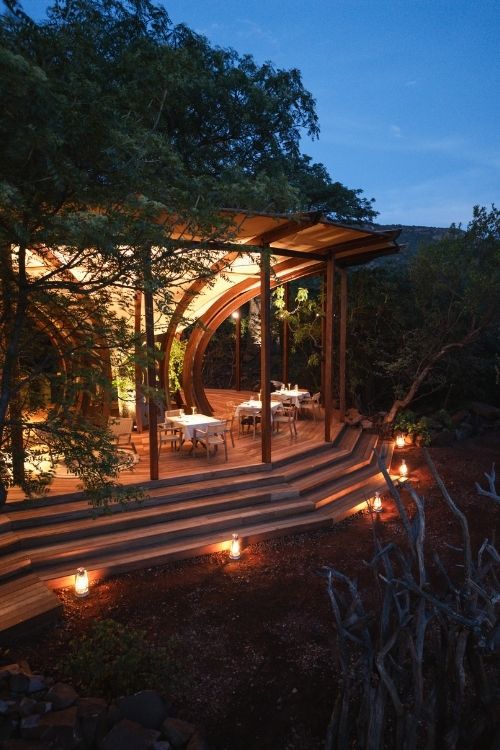
restaurant at night

5) EXPERIENCING THE BUSH BEYOND THE GAME DRIVE

GM: Every place tells a story. When you were opening and getting ready to receive guests, what story did you hope Luvhondo would tell its guests?


SD: I don’t know that I was specifically hoping the mountain would tell a story, other than our conservation story. I wanted to put the location on the map in order to protect the mountain. So I was hoping the mountain would enchant our guests in the same way it has enchanted us, and to share its beauty and majesty with them. We were just hoping that people would love this place as much as we do.


GM: What aspects of the safari experience did you most want to rethink or approach differently?


SD: Even with our first travel company, we’d been reimagining what the safari experience is. Under Canvas reimagined it for an American audience outside national parks. When we created Few & Far Luvhondo, we wanted to reimagine it again in the home of the safari.

Hiking

The traditional safari experience is: You go on a game drive morning and afternoon looking for animals, and that’s the focus. It can sometimes feel very one dimensional. You sit in a vehicle and you look for things.


It’s wonderful to spend time in the bush looking for animals, but I know there is more to being in the bush than just driving around looking for wildlife.


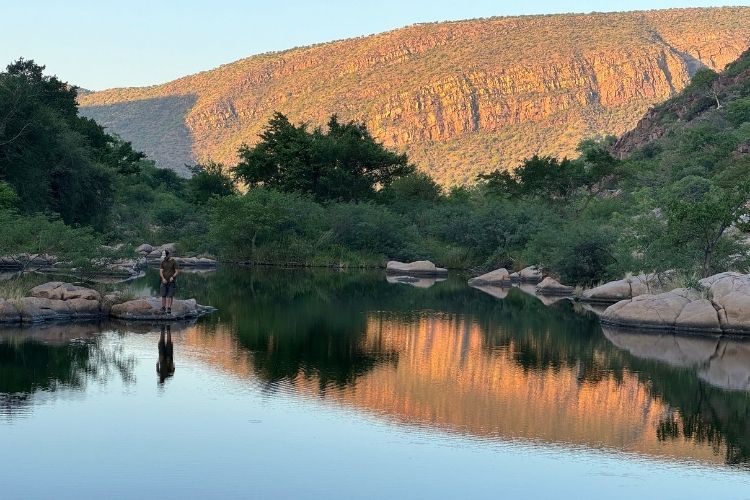
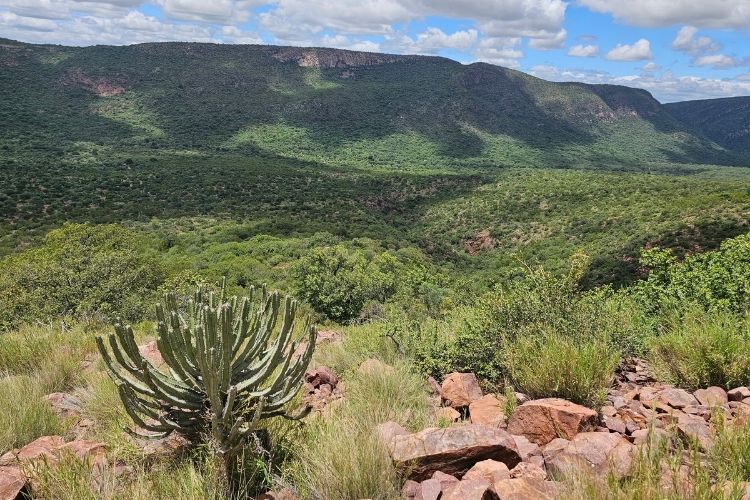
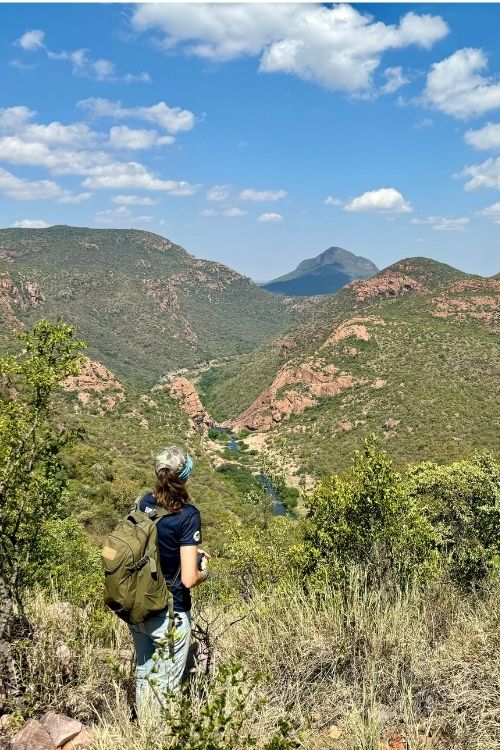
With Luvhondo, we very purposefully thought “How do we get our guests outside of a game viewer?” So our guests spend a lot of time on foot. They hike, they bike, they swim in waterfalls, they sleep out under the stars, they have adventures in this extraordinary ecosystem. They get to experience a different side of being on safari.


When you’re at Few & Far Luvhondo, you’re really immersed in it. It feels like you become part of the story, rather than just observing the story.

6) GUEST REACTIONS TO FEW & FAR LUVHONDO

GM: It’s been about 18 months since the lodge opened and you welcomed your first guests. Has anything about their reaction to the lodge, the activities, or the experience surprised you?


SD: It has certainly blown me away how much people have loved being here. We’re a very small property. We have just six suites, and 62 staff. Our guests have their own private guide. So the attention devoted to each guest is really quite extraordinary. People often feel like they’ve arrived in Narnia: they’ve walked through the wardrobe into this magical place, and people are constantly surprised by how transformative it feels.


GM: Was there a particular guest interaction you can think of, or a particular moment that made you think, “Yes, this is exactly why we built Luvhondo”?


SD: They happen all the time. I remember one lady. She was a business leader and looking for a particular piece of guidance and wisdom from her stay, and she said to the sky, “I need all the stars in the universe to guide me.”


That night, there was an enormous meteor shower. She was blown away by the connection of her own spirit, and then this night sky exploding with extraordinary stars and meteors in front of her eyes. I can’t manufacture those moments, but they remind you the world is an amazing place, and if you open yourself up to it, you can experience connection in a way you might never anticipate.


7) LUVHONDO IN THE LONG TERM


GM: What do you hope that people who visit will remember most about their time at Luvhondo?


SD: I hope there’s a deep sense of connection with the people that they came with, and with them themselves. The ability to just hear your own inner voice is something many of us find hard in a busy, crowded, non-stop kind of life.


I hope when they spend time here, people connect with that voice, and that they go away with clarity. They go away having made memories they will never forget, and with a sense of awe and wonder for what they’ve experienced here.

Few & Far Luvhondo Reserve 4
Few & Far Luvhondo Reserve 16 Horizontal

GM: Last question: Looking ahead, what do you hope that Few & Far Luvhondo will represent in 10 or 20 years’ time for travelers, for the landscape, and for surrounding communities?


SD: I hope that Luvhondo becomes a destination that people are well aware of. I hope it’s on the map. I hope we’ve fulfilled the vision to put this whole area under conservation. And I hope that we’re continuing to create meaningful, unique experiences in nature for people, just as we are today.

About Sarah Dusek


Avatar


Sarah Dusek is an entrepreneur, investor, conservationist and author whose career has been shaped by a belief that business can be a force for positive change. Originally from the UK, Sarah began her career working in Africa, including as an aid worker in Zimbabwe, before co-founding Under Canvas with her husband, Jacob, in 2009. The company pioneered luxury outdoor hospitality in the US and was sold in 2018 for more than $100 million.


Following the sale, Sarah and her family moved to South Africa, where she co-founded Enygma Ventures, an investment fund supporting women-led businesses across Africa. Her work with entrepreneurs and communities led her back to the question of how business could create lasting environmental and social impact, and ultimately inspired Few & Far, her latest venture in regenerative travel.


Today, Sarah is Co-Founder and CEO of Few & Far, which creates extraordinary travel experiences while investing in the protection and regeneration of wild landscapes and the communities connected to them. Its first lodge, Few & Far Luvhondo, opened in South Africa’s Soutpansberg Mountains in 2025. Sarah is also the author of Thinking Bigger: A Pitch-Deck Formula for Women Who Want to Change the World.

About Mindful Wayfarer

Welcome to Mindful Wayfarer, where we believe that travel is more than just a journey. It’s an opportunity to make a meaningful impact.

Table of Contents